
STRUCTURAL SAFETY MEASURES
You Are Here: STRUCTURAL SAFETY MEASURES
STRUCTURAL SAFETY MEASURES
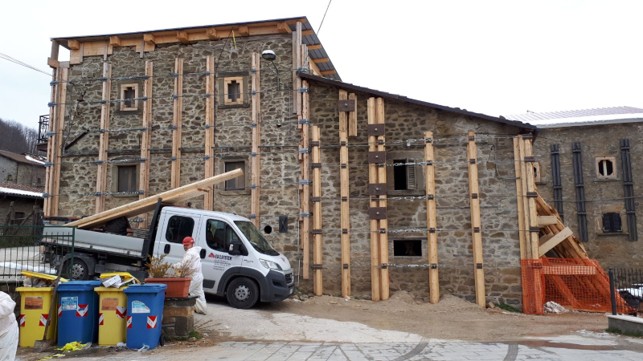
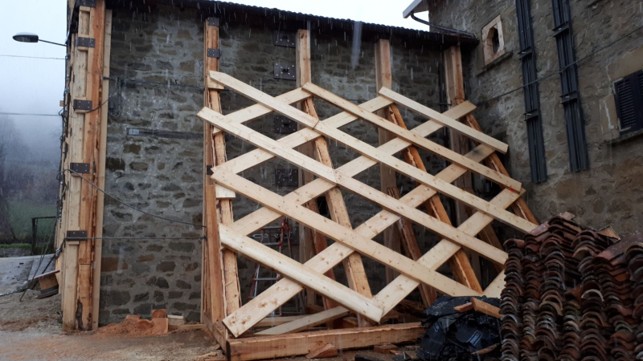
STRUCTURAL SAFETY MEASURES include rapid, targeted interventions to mitigate structural risks in damaged, unstable buildings or structures at risk of collapse.
These are temporary or permanent measures designed to stabilize vulnerable structural elements and prevent failure mechanisms, reduce risks to people and property, and prevent further deterioration until subsequent strengthening or repair work can be carried out.
When Intervention Is Needed
Structural safety measures are necessary when significant cracking, settlement, out-of-plane overturning, localized structural damage, abnormal deformation or instability may compromise a building’s safety.
They are particularly suitable for buildings damaged by earthquakes, deterioration, foundation settlement, accidental events or other conditions of structural vulnerability.
Types of Intervention
Measures may include:
- temporary shoring and bracing;
- structural restraint systems, tie rods and anti-overturning measures;
- stabilization of walls, vaults, floors and roofs;
- securing façades, cornices and projecting elements;
- confinement and restraint of cracked masonry sections;
- temporary support works for buildings at risk of collapse.
OBJECTIVES
The primary objective is to reduce immediate structural risks, prevent further damage and establish minimum safety conditions for subsequent inspections, design activities and any necessary strengthening work.
Each intervention is assessed according to the building’s condition, the extent of the damage and the failure mechanisms that have already developed or could potentially occur.
Conclusion
Structural safety measures are an essential stage in the management of damaged buildings or structures at risk of collapse. They make it possible to stabilize vulnerable structures and mitigate risks rapidly and in a controlled manner, with measures proportionate to the severity of the identified hazards.